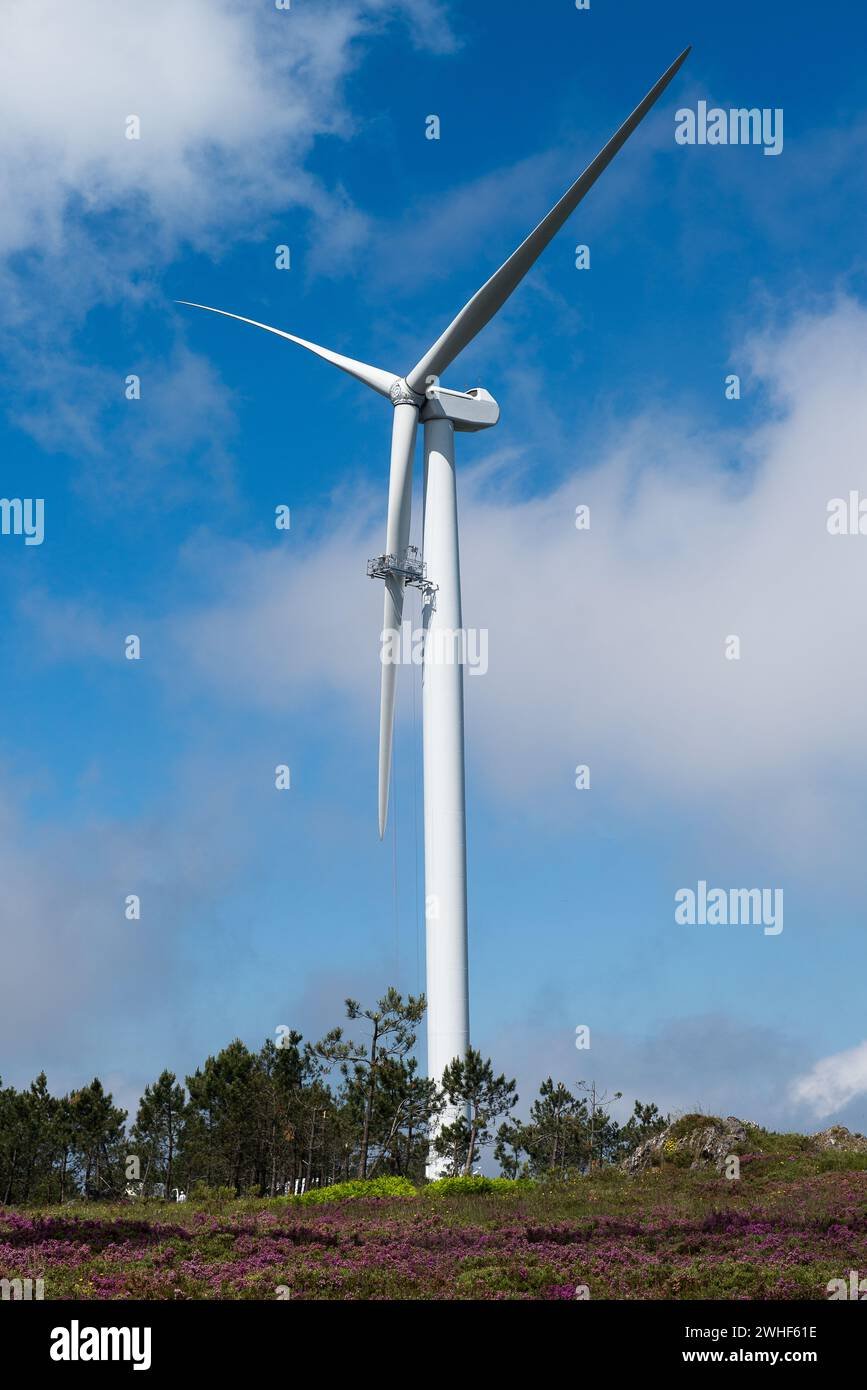
The wind industry in the U.S. is a powerhouse, with over 70,000 land-based turbines generating nearly 138 gigawatts of clean electricity. But as this fleet matures, a critical question arises: how do we ensure the Maintenance & Longevity of Wind Power Systems continue to deliver for decades to come? It's not just about keeping the lights on; it's about optimizing performance, adapting to new technologies, and responsibly managing the lifecycle of these colossal structures.
This isn't a simple "fix it when it breaks" scenario. The true longevity of a wind farm hinges on proactive maintenance, strategic upgrades, and thoughtful end-of-life planning. The decisions made today about an aging fleet — whether to repower, decommission, or innovate — will shape the future of renewable energy.
At a Glance: Wind Power System Longevity
- Expected Lifespan: Wind turbines are designed for 25-30 years, but many components require earlier attention.
- Key Lifespan Factors: Structural design, location (onshore/offshore), diligent maintenance, and smart operational strategies.
- Repowering: A strategic upgrade to extend life and boost output, ranging from component swaps (partial) to full turbine replacement.
- Decommissioning: The complete removal of a project, usually with land restoration, occurring at the true end of operational life or during full repowering.
- Waste Management: While 85-95% of a turbine's mass is recyclable metal, composite blades pose a recycling challenge, though new solutions are emerging rapidly.
- Aging Fleet: Over 14 GW of U.S. projects have been repowered, with another 16 GW expected by 2026, highlighting a growing trend.
The Wind Turbine Lifespan: More Than Just the Blades
When we talk about the expected service life of a wind turbine, a figure of 25-30 years often comes up. This is generally true for the major, foundational elements like the tower and the concrete foundation. They're built to withstand decades of stress and elemental exposure. However, the turbine isn't a single, monolithic entity that lasts a quarter-century without intervention. Many of its internal components have much shorter operational lifespans, and their condition directly dictates the overall health and output of the entire system.
Think of it like a car: the chassis might last for decades, but you'll replace tires, brakes, and potentially the engine or transmission long before that. For a wind turbine, these "wear-and-tear" components include blades, gearboxes, generators, and a host of smaller electrical and mechanical hardware. These parts often require repair or replacement due to operational stresses or simple material fatigue long before the 25-30 year mark.
Several factors conspire to influence how long a turbine — and its individual parts — truly lasts:
- Structural Design & Materials: High-quality materials, advanced aerodynamic design, and modularity in construction contribute significantly. Better designs allow for easier maintenance and component replacement. If you're curious about how wind turbines are built, the engineering behind them is quite fascinating.
- Location, Location, Location: An onshore turbine experiences different stresses than one in an onshore vs. offshore wind farm. Offshore turbines, for example, battle constant saltwater corrosion, stronger winds, and more challenging maintenance logistics. Local weather patterns, extreme temperatures, and even geological stability play a role.
- Proper Maintenance: This is arguably the most crucial factor. Consistent monitoring, scheduled inspections (typically 1-2 times per year), and preventative repairs can extend component life dramatically.
- Operational Strategies: How a turbine is operated day-to-day matters. Optimizing load, proactively shutting down in dangerously strong winds, and leveraging sophisticated data monitoring systems (SCADA - Supervisory Control and Data Acquisition) to catch anomalies early all contribute to longevity. SCADA systems, for instance, constantly track everything from wind speed and rotor RPM to bearing temperatures and power output, flagging potential issues before they become catastrophic failures.
Understanding these variables is the first step in unlocking true longevity for any wind power system.
Proactive Care: The Backbone of Wind Turbine Longevity
In the world of wind energy, waiting for something to break is a costly mistake. Proactive maintenance is not just a best practice; it's an economic imperative. A well-maintained turbine is an efficient turbine, producing more electricity, generating more revenue, and ensuring a longer operational life.
Maintenance strategies primarily revolve around two pillars: scheduled inspections and continuous monitoring.
- Scheduled Inspections: These are typically carried out once or twice a year, involving a thorough physical check of the turbine. Technicians will inspect:
- Blades: For cracks, erosion, or lightning damage. Even minor surface damage can impact aerodynamic efficiency and potentially lead to larger structural issues.
- Nacelle: This houses the gearbox, generator, and control systems. Technicians check fluid levels, look for leaks, inspect electrical connections, and listen for unusual noises that might indicate bearing wear or gearbox issues.
- Tower: For structural integrity, corrosion, and the condition of safety systems like ladders and platforms.
- Foundation: For any signs of subsidence or cracking.
- Braking Systems: Essential for safe operation and shutdowns.
- Continuous Monitoring (SCADA): This is where modern technology truly shines. SCADA systems collect vast amounts of real-time data from every sensor on the turbine. This data can reveal subtle changes that indicate an impending failure long before it's visible to the human eye. For example:
- Temperature Spikes: An unusually high gearbox oil temperature could signal excessive friction, hinting at worn bearings.
- Vibration Analysis: Changes in vibration patterns can pinpoint imbalances in the rotor or issues within the drivetrain.
- Power Output Deviations: A sudden drop in power output for a given wind speed might indicate blade damage or a control system issue.
By analyzing this data, operators can schedule maintenance precisely when and where it's needed, preventing minor issues from escalating into major, costly breakdowns. This "predictive maintenance" approach saves time, reduces downtime, and extends the life of expensive components.
When the Wind Shifts: Repowering Your Fleet
Even with impeccable maintenance, every wind turbine eventually faces a choice point: continue operating as is, decommission it, or repower it. With over 14 GW of U.S. projects already fully or partially repowered, and another 16 GW expected through 2026, repowering has become a dominant strategy for maximizing the value of existing wind sites.
Project owners choose to repower for compelling reasons:
- Increased Energy Production: Newer turbines are simply more efficient and powerful, often leading to a higher capacity factor.
- Extended Project Life: Breathing new life into an aging asset pushes its operational horizon out for another 10-20+ years.
- Access Tax Incentives: Repowering projects can often qualify for renewable energy tax credits and other financial benefits, making the investment even more attractive.
- Leveraging Existing Infrastructure: Reusing land, permits, and sometimes even parts of the electrical grid saves significant costs and time compared to building a brand-new project elsewhere.
Repowering isn't a one-size-fits-all solution; it comes in two main flavors:
Partial Repowering: Targeted Upgrades for a Performance Boost
This approach is like giving your car a significant engine overhaul and new tires, but keeping the chassis. Partial repowering focuses on upgrading key components while reusing the existing towers and foundations. Turbines targeted for partial repowers in 2021 had a median age of 10 years, showing that this isn't just for end-of-life machines, but also for mid-life optimization.
What gets upgraded?
- Blades: Newer, longer, more aerodynamically efficient blades can dramatically increase energy capture. In 2021, 2,307 blades were retired from just 12 projects due to partial repowering, highlighting this trend.
- Gearboxes: More robust and efficient gearboxes can handle increased loads from new blades and operate more reliably.
- Internal Nacelle Components: Generators, control systems, and other electrical components are often replaced with modern, more efficient versions.
The goal is to increase the turbine's capacity factor and energy output without necessarily making the overall turbine significantly larger in height. This strategy often requires some land restoration post-construction, mainly around the turbine base where work is concentrated.
Full Repowering: A Complete Overhaul for a New Era
Full repowering is a more extensive transformation, akin to replacing your old car with a brand-new, more powerful model. It involves:
- Decommissioning original turbines and foundations: The old structures are taken down and often removed.
- Construction of new, often significantly larger, turbines and foundations: Modern turbines are taller, have larger rotors, and capture more wind energy. For example, in 2020, three projects replaced 343 older, smaller turbines (totaling 120 MW) with just 50 new, much larger turbines (totaling 148 MW) on the same land footprint.
- Potential replacement of the electrical collection system: Larger turbines demand a more robust electrical infrastructure.
This comprehensive approach often leads to substantial increases in overall project capacity and can even allow for a more optimized project layout with fewer turbines spaced further apart. It's a bigger undertaking, requiring larger construction crews and potentially taking nearly two years to complete.
Local Impacts of Repowering
While repowering offers significant benefits, it's not without local considerations:
- Economic Boom: An influx of temporary construction workers and opportunities for local businesses (materials, lodging, food).
- Increased Noise & Road Wear: Heavy equipment, large cranes, and increased traffic during construction can be disruptive.
- Altered Economic Benefits: Land lease payments might change (e.g., fewer turbines but potentially higher royalties for landowners due to increased capacity). Property tax revenues could also shift.
- Viewshed & Shadow Flicker: Larger, newer turbines can alter the visual landscape. However, sometimes consolidation with fewer, larger turbines can actually reduce the overall visual impact compared to a dense field of older, smaller machines.
The End of the Line? Decommissioning Wind Projects
When repowering isn't the chosen path, or at the true conclusion of a project's operational life (often after 25-30 years), decommissioning becomes the necessary next step. This process involves the systematic removal of wind energy infrastructure and the restoration of the land.
Planning for Decommissioning
Crucially, decommissioning isn't an afterthought. Comprehensive plans are typically developed during the original project planning phase, often mandated by local regulations and land lease agreements. These plans outline exactly how the site will be restored and what will happen to the materials.
The Process and Timeline
Decommissioning is a significant undertaking that can take anywhere from 6 to 24 months, depending on the project's size and complexity. It involves:
- Disassembly: Turbines are carefully taken apart, piece by piece, using specialized cranes.
- Demolition: Foundations and other concrete structures are broken up.
- Removal: All components are transported off-site for processing.
- Restoration: The land is restored as closely as practical to its pre-project conditions. This often includes soil decompaction, reseeding with native vegetation, and replacing any damaged drainage tiles.
Many communities, in their land lease agreements and local ordinances, define a specific removal depth for below-ground infrastructure. This often means some parts of foundations and underground cables are left in place (typically 3-5 feet below the surface). Why? Complete removal can cause more environmental disturbance than leaving components buried, including noise, ground disturbance, compromised site stability, erosion, or unwanted water pathways.
Costs and Financial Assurance
Decommissioning is not cheap. Estimates from 2019–2021 suggest per-turbine costs ranging from $114,000–$195,000. However, when the salvage value of recyclable materials (primarily metals) is factored in, the net cost can reduce to $67,000–$150,000 per turbine.
Project owners are typically responsible for these costs. To ensure funds are available, state or local regulations often require financial assurance (e.g., bonds or escrow accounts) at the outset of a project. These funds are usually released upon successful completion of the decommissioning process.
Local Economic Shifts
While repowering brings temporary economic boosts, decommissioning results in the loss of operational and maintenance jobs, land lease payments to landowners, and property tax revenues for local communities. This is why careful planning and community engagement are vital throughout a wind project's lifecycle.
Beyond the Landfill: What Happens to Old Turbines?
As wind turbines reach their end-of-service, a critical question arises: what happens to all those materials? The good news is that much of a turbine is highly recyclable. The challenge, however, lies in a specific, high-profile component: the blades.
When components and infrastructure are taken out of service, they can be processed in three primary ways:
- Repurposing: Giving components a new life in a different form. Imagine old blades becoming pedestrian bridges, playground equipment, or noise barriers. This is an emerging, creative solution.
- Recycling: Transforming materials into new products through thermal, chemical, or mechanical processing. Metals are the star here, but significant progress is being made with composites.
- Disposal: Usually meaning landfilling, but can also include incineration. This is the least preferred option, especially for valuable materials.
The choice depends on a complex interplay of factors: material composition, local regulations, market demand for recycled materials, processing costs, available infrastructure, and existing land/permitting agreements.
The Good News: Recyclable Metals
Between 85% and 95% of a wind turbine's mass (excluding project infrastructure) consists of easily recyclable metals like aluminum, steel, copper, and iron. These materials often have significant salvage value, helping to offset decommissioning costs. This is a massive win for sustainability, ensuring that the vast majority of a turbine's weight can be continuously reused.
The Challenge: Composite Blades
The remaining 6%-14% of a turbine's mass is made up of composite components, primarily the blades, but also nacelle and rotor covers. These composites are typically fiberglass or carbon fiber mixed with epoxy resin, designed for incredible durability and lightweight strength. And that's precisely what makes them so difficult to recycle.
Historically, the most cost-effective solution for composite blades has been disposal in landfills. While this has generated headlines, it's important to put it in perspective: in 2018, less than 50,000 tons of blade waste were landfilled in the U.S., representing a tiny 0.017% of combined municipal solid waste and construction/demolition waste. Even with projections of 200,000–370,000 tons/year by 2050, it's still less than 0.15% of 2018 waste. Crucially, landfilled blades are not classified as hazardous waste, though their sheer size can pose space challenges for some communities.
Emerging Solutions for Composites
The industry isn't sitting still. Researchers and companies are actively developing solutions to tackle composite waste:
- Mechanical Recycling: Shredding or grinding composite materials into fibers or aggregates that can be used in other products, like cement, road asphalt, or even new construction materials. Veolia's facility in Louisiana, MO, for instance, can mechanically recycle 3,000 blades per year.
- Thermal Decomposition Recycling: Using heat to break down the resin and recover valuable glass or carbon fibers. Carbon Rivers, LLC, funded by the DOE, is pioneering this technology in the U.S.
- New Blade Materials: Manufacturers are actively developing new blade designs and materials engineered for easier recycling or even biodegradability within the next decade, with some aiming for zero-waste blades. This is truly innovations in wind energy recycling that could redefine the industry's environmental footprint.
As of 2022, landfilling remains the most cost-effective option for blades due to the limited availability and higher costs of these advanced alternatives. However, as these new methods mature and scale, they are expected to become much more economically competitive and widely adopted.
Infrastructure: What Stays Behind?
Foundations, underground cables, and access roads also have end-of-service considerations. Foundations, surprisingly, account for 75% of a land-based wind project's mass, with cables at 2% and the turbine itself at 23%.
While foundations and cables can be recycled or repurposed, they are typically left in place underground. This is largely due to the environmental impacts associated with their complete removal, such as significant ground disturbance, noise, potential erosion, and disruption of natural water pathways. Lease agreements and local regulations often stipulate that these elements can remain buried (usually 3-5 feet below the surface), minimizing environmental harm. Access roads, if no longer needed, might be revegetated or removed depending on local agreements.
Navigating the Future: Trends and Innovations
The conversation around Maintenance & Longevity of Wind Power Systems isn't static; it's evolving rapidly. With 72,130 turbines and over 210,000 blades deployed in the U.S. as of July 2022, and retirement rates projected to increase from 3,000–9,000 blades per year (2021–2026) to 10,000–20,000 per year by 2040, the industry's focus on sustainable solutions is intensifying.
Future trends will likely include:
- Advanced Predictive Maintenance: Leveraging AI and machine learning to analyze SCADA data with even greater precision, predicting component failures with higher accuracy and extending operational lifespans.
- Modular Turbine Designs: Engineering turbines with even greater modularity, making it easier and more cost-effective to replace components, upgrade technologies, and even dismantle for recycling.
- Circular Economy for Blades: A concerted effort towards developing fully recyclable or even biodegradable blade materials, moving away from the landfill model entirely. This is a key aspect of the future of wind power.
- Standardized Decommissioning Practices: Developing more uniform guidelines and best practices for decommissioning across states and regions, ensuring consistent environmental protection and cost management.
- Increased Repowering Activity: As technology continues to advance, the economic incentives for repowering will only grow, making it the preferred option for many aging sites.
Making Smart Decisions for Your Wind Assets
Whether you're a wind farm owner, an investor, or a policy maker, understanding the lifecycle options for wind power systems is crucial. The decision to maintain, repower, or decommission is a complex one, driven by economics, environmental responsibility, regulatory frameworks, and technological advancements.
Key decision criteria include:
- Current Performance vs. Potential Upgrade: Is the existing turbine underperforming compared to modern alternatives? What's the potential boost in capacity factor from new blades or internal components?
- Age and Condition of Core Assets: How robust are the existing tower and foundation? Are they capable of supporting larger, more powerful modern turbines?
- Financial Incentives: What tax credits, grants, or other financial mechanisms are available for repowering projects? How do these impact the ROI?
- Regulatory Landscape: What are the local and state requirements for decommissioning? Are there financial assurance mandates? What are the permitting challenges for new construction if a full repower is chosen?
- Market Demand and Power Purchase Agreements (PPAs): Is there a strong market for additional clean energy, and can a repowered project secure favorable PPAs?
- Sustainability Goals: Beyond economics, what are the environmental goals for the project? Can the chosen path support a circular economy approach for materials?
The journey of a wind power system, from its first spin to its final decommission, is a testament to human ingenuity and our commitment to clean energy. By embracing proactive maintenance, strategic repowering, and innovative end-of-life solutions, we can ensure that wind continues to be a cornerstone of a sustainable energy future. If you're looking to explore the foundational elements of wind energy yourself, you might want to Find your wind generator to understand the principles firsthand.